Director’s statement
When I realised how troubled my parents’ marriage had become, I planned to persuade them to divorce. Before I could act, however, my father suffered a stroke, and the burden of care fell on my mother, who was on the verge of leaving. The question shifted immediately from one of personal happiness to questions of moral obligation, family responsibility and personal sacrifice. Time and Tide grew out of that moment.
The film was originally conceived as narrative fiction. But once we began filming, it became clear that my family were uncomfortable performing scripted scenes. Gradually, the project moved away from fiction and towards observation. For a long time during the editing process, I still tried to force the material into a narrative film, but once I stripped away the artificiality, I realised the heart of the film came from simply observing what was already there.
This is a universally accessible family story – about husbands and wives, parents and children, and the pressures of obligation and financial burden. Although the film is deeply personal and specific, it reflects a wider generational experience in China. In my parents’ generation, families were often separated in the aftermath of the Great Leap Forward and the Cultural Revolution, when survival meant working far from home or overseas, and developing a remarkable capacity – and expectation – to endure hardship. In Chinese, we call this “eating bitterness”.
In my own generation, rapid urbanisation has produced the largest internal migration in history, yet the household registration system prevents many workers from bringing their children to the cities where they live and work. These histories and social structures form the invisible framework shaping the family in the film.
Time and Tide is also a film about domestic violence, but it is not concerned with judgement. Instead, it observes how violence reverberates through a family over time, and how responsibility, care and obligation continue to coexist within intimate relationships.
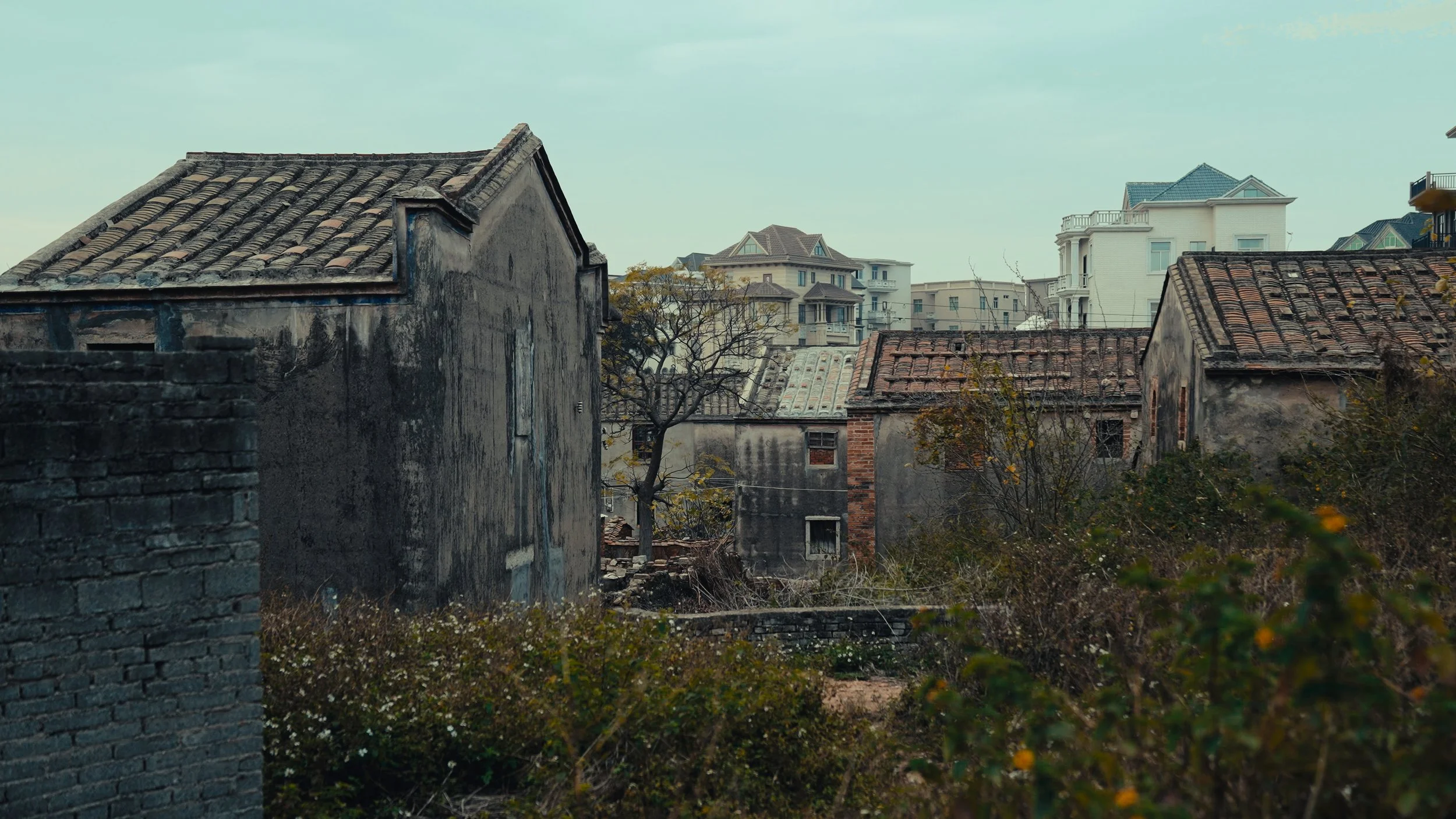
Having been on my own since I was 13, it was only through making this film that I truly got to know my family. The film is the first to be shot in my hometown and only the second to feature the Fuqing dialect, a cultural identity that is gradually disappearing as younger generations shift towards Mandarin.
I believe Time and Tide will resonate as both a personal story and a reflection of larger social changes that continue to shape family life across generations in China.
Producer/Cinematographer’s Statement
As an outsider living with someone else’s family, there are times when you debate with yourself if what’s unfolding in front of you is too personal to capture. But inevitably those are the moments that form the essence of the film. Time and Tide allows those scenes to exist without judgement and embraces the genuine complexity of a fracturing family.